
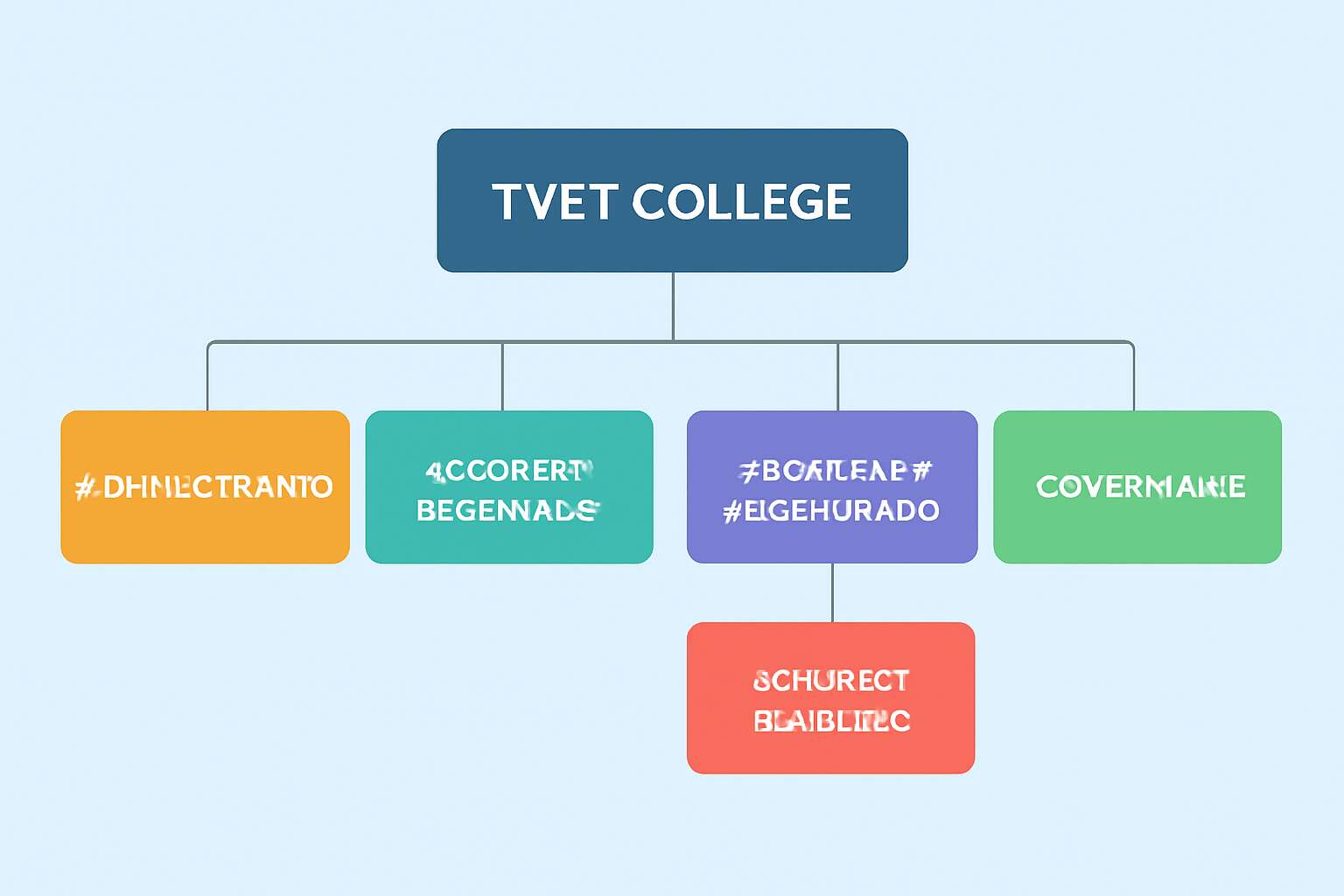
TVET College Organizational Structure: An SEO-Driven Outline
Section: Governance Framework
Governance isn’t merely a rulebook; it is the quiet engine behind every curriculum, every apprenticeship, every late-night marker thrown across a campus corridor. Clear governance accelerates skill development and trust.
In the tvet college organogram, lines of authority weave together governance, academics, and operations, turning policy into practice. When roles are explicit, budgets align with learning outcomes and campus vitality follows.
Key components often visible in governance charts include stakeholder bodies and decision rights that ensure accountability and continuity across campuses.
- Governing body and its oversight duties
- Executive leadership (Principal/CEO) and strategic planning
- Academic boards shaping curricula and assessment
- Finance and audit committees safeguarding resources
- Student representation and staff development
Together, these strands form a living map that guides policy, people, and performance within South Africa’s TVET ecosystem.
Section: Leadership and Management Hierarchy
In the tvet college organogram, leadership isn’t a stalled mural in South Africa’s TVET ecosystem—it’s an operating system that keeps timetables from colliding with exams and ensures apprenticeships become real-world skills. The hierarchy is deliberately flat enough to move fast, yet sturdy enough to weather audits and campus storms. Think Principal or CEO at the helm, steering with a team that translates strategy into daily routines.
- Principal/CEO — sets strategic direction, external partnerships, and a campus culture that’s more than a buzzword.
- Deputy Principals — divide and conquer: academics, operations, and student services; ensures continuity when crises hit.
- Heads of Department/Programs — curriculum oversight, assessment alignment, and industry tie-ins that actually feel timely.
- Registrar and Admin Services — student records, admissions, timetabling, and resource scheduling with a smile (and a calendar).
Beyond titles, the structure anchors accountability, clarity, and cross-campus coordination; data and dialogue flow through it like electricity, turning policy into practice with a touch of pragmatic flair.
Section: Academic and Administrative Units
In South Africa’s TVET landscape, the tvet college organogram is the campus’s nervous system—keeping timetables aligned and exams on track. “Structure is freedom on campus,” a veteran principal often says, and the daily rhythm proves it: when roles are clear, decisions move fast and learning stays the focus.
Academic and Administrative Units form the working spine, translating strategy into daily routines. Academic units shape curriculum streams, practical assessments, and industry-connected projects; Administrative units handle admissions, timetabling, student records, and resource coordination. In the tvet college organogram, these layers must harmonize to avoid silos.
- Academic divisions: schools or departments aligned to trades
- Administrative services: registrar, finance, HR, facilities
- Support units: student services and career guidance
Together, they anchor accountability, clarity, and cross-campus coordination within the tvet college organogram, turning policy into practice with pragmatic flair and South African resilience.
Section: Support Services and Digital Infrastructure
A cross-section of South Africa’s TVET campuses reveals the tvet college organogram as a quiet powerhouse—the architecture that turns policy into practice. A fresh insight shows that when support services and digital infrastructure align, issue resolution speeds rise, and learning momentum never stalls. I’ve watched a student log in to a seamless portal, and the campus hum shifts from friction to flow; structure becomes a living rhythm!
- Student services and welfare
- Career guidance and placement
- Digital libraries and learning resources
- IT helpdesk, cybersecurity, and device management
- Facilities oversight and safety compliance
Within the organogram, support services and digital infrastructure anchor day-to-day life. They map the touchpoints that keep admissions, timetabling, and records moving in sync, while digital tools offer a safety net and a learning companion.



0 Comments